
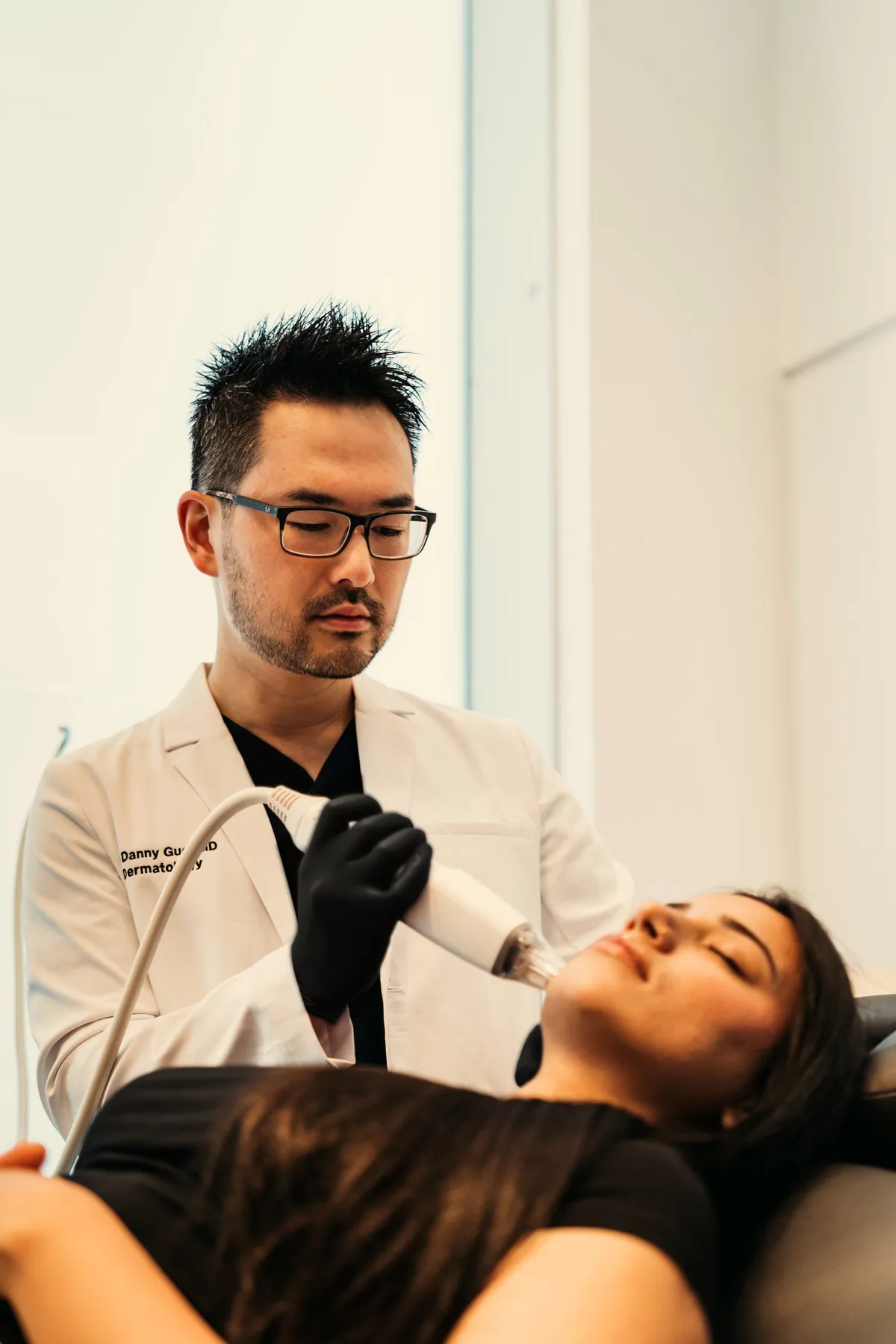
Different scars need different tools. The treatment is matched to the scar.
- Types
- Acne, surgical, keloid
- Redness
- Vbeam
- Texture
- CO2, UltraClear
Types of scars
Most scars are pale, flat marks. Hypertrophic and keloid scars are raised, formed when the body produces too much collagen. Sunken scars usually follow acne.
Most scars are harmless and very rarely turn into cancer, but treatment can improve how they look.
Who scars more easily
Scarring is a natural part of healing after an injury, surgery, acne or an inflammatory skin condition.
Some people are more prone to keloids, including people of African, Asian or Hispanic descent, those with a family history of keloids, and people between 10 and 30 years of age.
Treatment options
- Topical creams and certain skin products can help conceal scars.
- Steroid injections can help flatten and soften thicker scars, including keloids.
- Vbeam laser reduces redness and vascularity.
- Surgery can revise the shape and reduce the visibility of a non-keloid scar.
- CO2 laser resurfacing and microneedling improve the texture of acne scars.
- PicoWay laser and chemical peels help with acne scars and the marks they leave.
- UltraClear, a cold fibre laser, resurfaces acne scars with less heat, which may lower the risk of pigmentation and redness in skin of colour.

Begin with
a conversation.
Book appointmentScar treatment frequently asked questions
What types of scars are there?
Most scars are flat and pale. Hypertrophic and keloid scars are raised because the body produces excess collagen, while sunken (atrophic) scars are usually the result of acne.
Which treatment is right for my acne scars?
It depends on the type and depth of the scars and on your skin type. Options include CO2 laser resurfacing and microneedling, and a combination of treatments is often used. An assessment is the first step.
Can keloid scars be treated?
Yes. Steroid injections can help flatten and soften keloids and other thick scars. Keloids can recur, so treatment is planned individually.
Can a scar be removed completely?
No treatment erases a scar entirely. The goal is to make it less noticeable by improving its texture, colour or shape.
How soon can a scar be treated?
Scars keep maturing for up to a year. Some treatments can start early, while others work best once the scar has settled, so timing is decided at your assessment.