
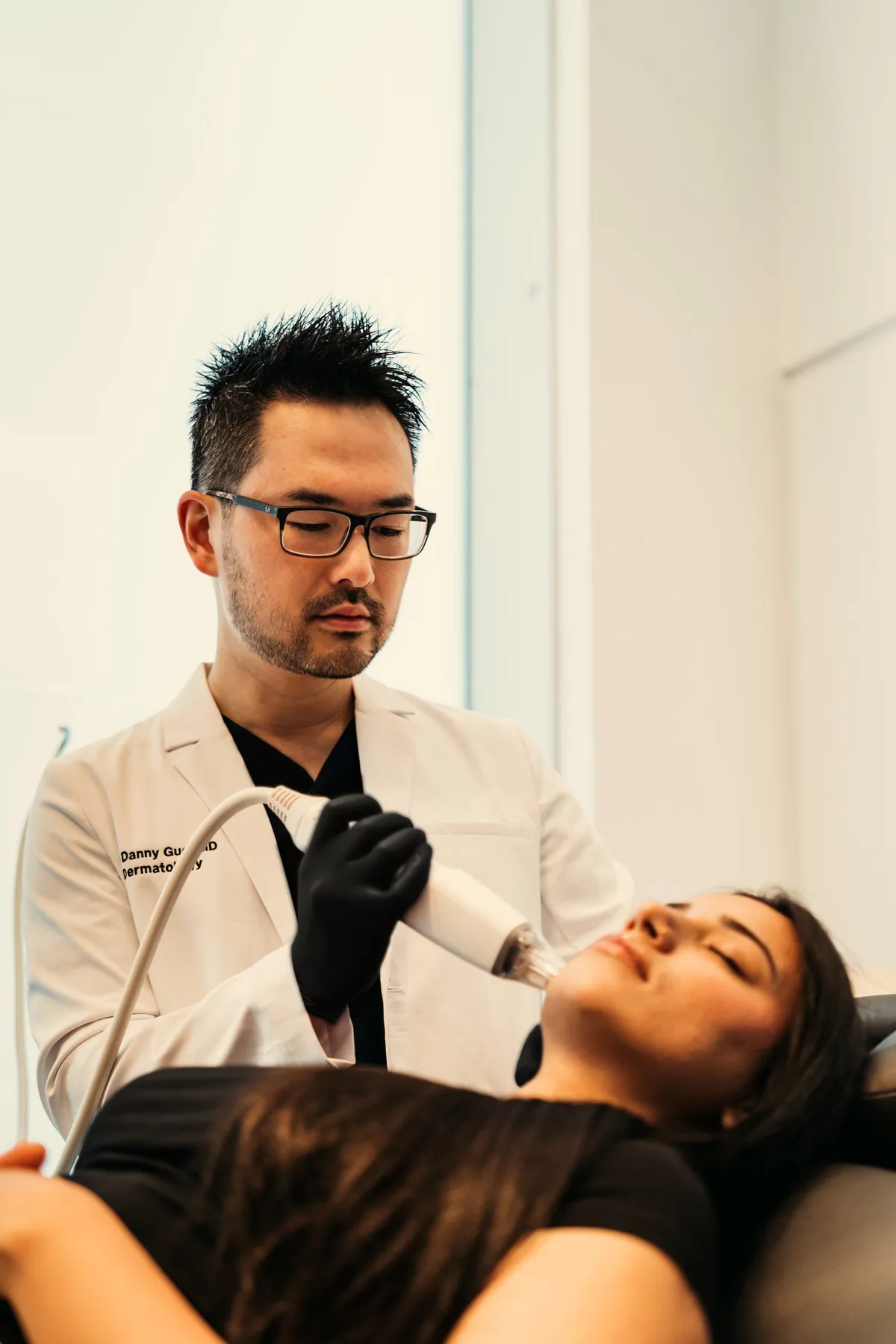
Acne scar treatment in Calgary with Dr. Guo, using lasers, microneedling and other treatments matched to your scar types.
- Approach
- Combined
- Assessed
- By scar type
- Provider
- Dr. Guo
Types of acne scars
Most acne scars are depressed (atrophic) scars, caused by loss of tissue as the skin heals:
- Ice pick scars: narrow, deep pits
- Boxcar scars: wider depressions with defined edges
- Rolling scars: broad, shallow depressions that give the skin a wavy texture
Less commonly, acne leaves raised (hypertrophic or keloid) scars. Red or brown marks left after a breakout are not true scars, but they can take months to fade and can also be treated.
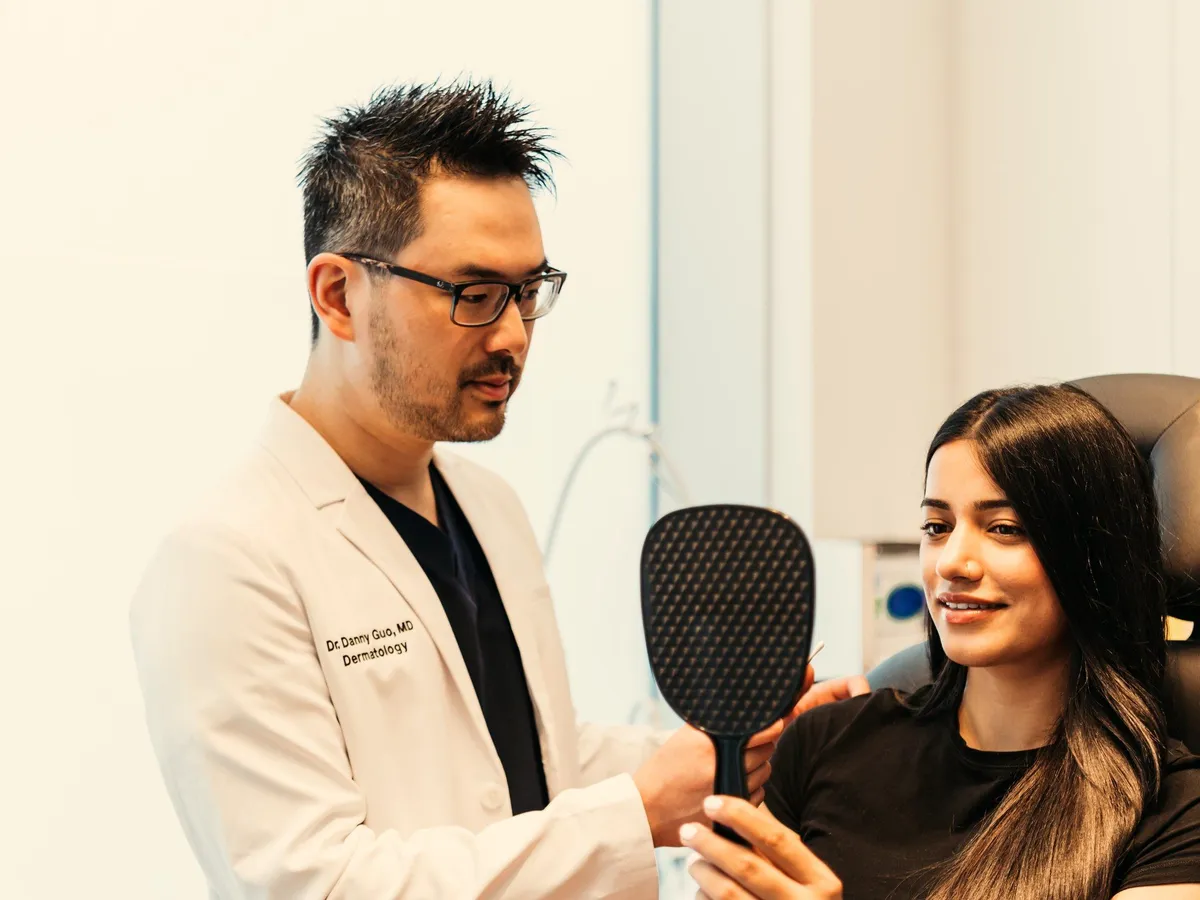
How acne scars are assessed
Acne scar treatment options
- CO2 laser resurfacing, performed by Dr. Guo, removes thin layers of damaged skin and stimulates new collagen to smooth depressed scars.
- UltraClear laser, a cold fibre laser, resurfaces acne scars and is designed to limit heat, which may lower the risk of pigmentation changes and redness compared with conventional ablative lasers, particularly in skin of colour.
- Microneedling stimulates collagen with fine needles and is suitable for most skin tones.
- PicoWay laser can improve acne scars and the pigmented marks acne leaves behind.
- Chemical peels can improve discoloration and skin texture.
- Vbeam laser can reduce redness in scars and marks.
- Dermal fillers may be used to lift selected depressed scars.
- Steroid injections can help flatten raised scars.
What to expect
Acne scar treatment usually involves a series of sessions, and many plans combine more than one treatment. Recovery depends on the treatment: CO2 laser resurfacing typically needs about 4 to 7 days of healing, while microneedling usually causes a few days of redness.
Sun protection is important throughout, both to protect healing skin and to reduce the risk of pigmentation changes. You will receive aftercare instructions specific to your treatment.
Scar type and treatment
| Scar type | Treatments often used |
|---|---|
| Ice pickNarrow, deep pits | TCA CROSS (a strong acid placed inside each pit), punch excision for the deepest, and fractional CO2 laser resurfacing |
| BoxcarWider depressions with defined edges | CO2 laser resurfacing, RF microneedling |
| RollingBroad, shallow depressions that make the skin look wavy | Subcision to release the bands that pull the scar down, CO2 laser resurfacing or RF microneedling; in some cases, filler or a biostimulator to lift them |
| RaisedHypertrophic or keloid scars | Steroid injections; Vbeam for redness |
| Red or brown marksNot true scars, but slow to fade | Vbeam, PicoWay or chemical peels |
Most people have more than one type, so plans usually combine treatments. In darker skin tones, UltraClear and microneedling are often preferred. Your plan is decided at your consultation.
Which treatment is right for my acne scars?
- Rolling and boxcar scars often respond to treatments that rebuild collagen, such as CO2 laser resurfacing and microneedling.
- Red or brown marks may be treated with Vbeam, PicoWay or chemical peels.
- Raised scars are usually treated with steroid injections rather than resurfacing.
- Darker skin tones carry a higher risk of pigmentation changes with some lasers, so options such as UltraClear, a cold fibre laser, and microneedling are often preferred.
Most people have more than one type of scar, which is why a combination plan is common. You can read more about scars in general on our scars page.
Who is a good candidate for acne scar treatment?
You are likely to be a good candidate if your acne is under control, you are in good general health and you have realistic expectations about what treatment can achieve.
Tell Dr. Guo if you have taken isotretinoin recently, are prone to keloid scarring, get cold sores, or are pregnant or breastfeeding, as these can affect which treatments are suitable and when.
Results and risks
What results can I expect?
The goal of treatment is to make scars less noticeable; no treatment erases them completely. Improvement is gradual, because new collagen forms over several months after each session.
Risks and side effects
Redness, swelling and temporary sensitivity are common after treatment. Less common risks include changes in skin pigmentation, infection and, rarely, new scarring. Dr. Guo will review the risks of each option with you before treatment.
Further reading: Acne Scar Treatment Options: Lasers, Microneedling and More · UltraClear vs. CO2 Laser Resurfacing: How Do They Compare? · How microneedling improves your skin · Everything you need to know about acne
State of the art facility
Visit our brand new state-of-the-art facility with top-of-the-line and cutting-edge technologies and equipment, and a full spectrum of medical, surgical, cosmetic, and laser dermatology.
You can count on knowledgeable staff and easy parking; please contact the clinic for current appointment availability. Our facility is one of the largest Mohs Surgical Suites in Canada.
Begin with
a conversation.
Book appointmentAcne scar treatment frequently asked questions
Can acne scars be removed completely?
No treatment erases acne scars entirely. The aim is to make them less noticeable by improving the texture and colour of the skin.
What is the best treatment for acne scars?
It depends on the type of scar and your skin type. Options include CO2 laser resurfacing, UltraClear laser, microneedling, PicoWay laser, chemical peels and fillers, and many people benefit from a combination.
Who performs acne scar treatment at Rejuvenation Calgary North?
Dr. Danny Guo assesses your scars and plans your treatment. He personally performs CO2 laser resurfacing and filler treatments. Microneedling and chemical peels are performed by his clinical team, and PicoWay and Vbeam treatments are performed by the clinical team under his medical direction.
How many sessions will I need?
Most people need a series of sessions. The number depends on the type and severity of the scars and the treatments chosen.
Can acne scars be treated on darker skin?
Yes. Some lasers carry a higher risk of pigmentation changes in darker skin, so treatments such as UltraClear, a cold fibre laser, and microneedling are often preferred. Dr. Guo will recommend options suited to your skin tone.
Can I treat acne scars while I still have acne?
Active acne is usually treated first, so that new breakouts do not cause new scars during treatment.
How much does acne scar treatment cost in Calgary?
The cost depends on your individual treatment plan. Contact us to book a consultation with Dr. Guo and receive a quote.
Does acne scar treatment hurt?
Numbing cream is used for most treatments, so most people feel only mild to moderate discomfort. The skin can feel tender or sunburnt for a few days afterwards.
Is there downtime after acne scar treatment?
It depends on the treatment. Microneedling usually means a few days of redness, and laser resurfacing can mean several days to two weeks of healing. Dr. Guo will explain what to expect for your plan.
When will I see results from acne scar treatment?
Results build gradually. Scars usually improve over a series of sessions, and collagen keeps forming for months after each one.
How long do acne scar treatment results last?
Improvement in scarring is generally long-lasting, as new collagen fills in the scars. The skin continues to age, so sun protection and good skincare help maintain results.