
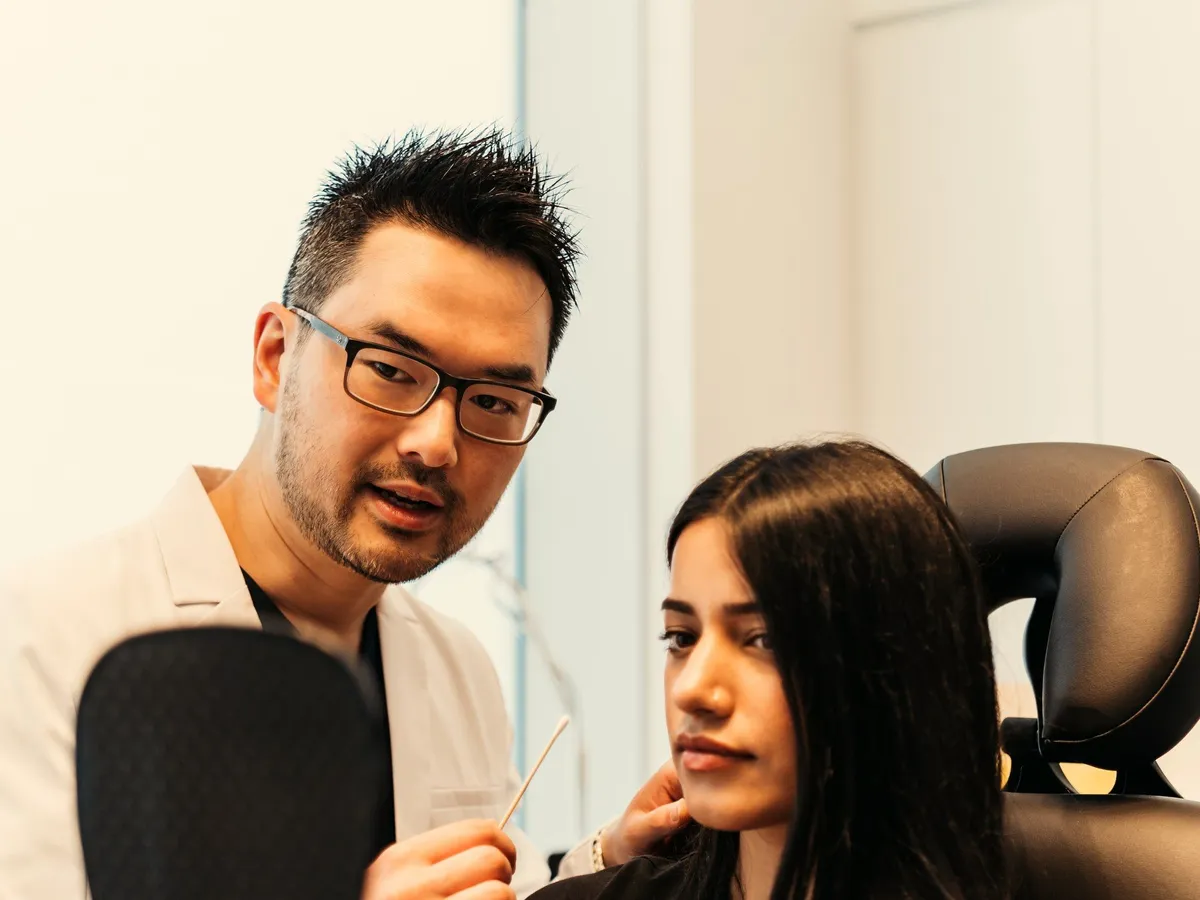
Acne is treatable at every stage. The right plan depends on the type you have.
- Types
- Mild to cystic
- Plan
- Personalised
- Scars
- Also treated
Types of acne
Acne ranges from non-inflammatory blackheads and whiteheads, which often respond to over-the-counter care, to inflamed red bumps that need stronger treatment.
- Severe acne carries a risk of lasting skin damage and usually calls for oral medication such as isotretinoin, sometimes with hormonal treatment.
- Cystic acne forms large, tender, pus-filled bumps deep in the skin and can scar if it is not treated properly. It typically needs prescription treatment and a long-term plan.
- Hormonal acne is more common in adults, particularly women. It tends to appear as cysts and nodules along the lower face, chin and jawline, and can flare with the menstrual cycle, pregnancy or menopause.
What causes acne
- Dead skin cells that are not shed properly block the pore. Exfoliating ingredients such as salicylic acid help keep pores clear.
- Excess oil from overactive sebaceous glands, often driven by hormones or genetics, clogs pores and feeds bacteria.
- Hormonal changes, especially androgens, increase oil production during puberty and, in adults, around menstruation, pregnancy or conditions such as polycystic ovary syndrome (PCOS).
Topical and prescription treatment
Over the counter: salicylic acid to unclog pores, benzoyl peroxide to kill acne-causing bacteria and remove excess oil, and retinoids to speed skin cell turnover.
Prescription: topical antibiotics, prescription-strength retinoids and combination creams for stubborn acne. Severe acne may need oral medication such as isotretinoin or hormonal therapy.
Laser and light treatment
Laser and light treatments can help reduce active acne and improve acne scars. Options include fractional lasers, intense pulsed light (IPL) and photodynamic therapy (PDT).
Marks and scarring left by acne can also be treated with chemical peels, microneedling and PicoWay laser. See acne scar treatment for the full range of options.
Further reading: Everything you need to know about acne · Evidence-based skincare
Dr. Guo explains acne

Begin with
a conversation.
Book appointmentAcne frequently asked questions
What Causes Acne?
Acne is caused by the clogging of hair follicles with oil and dead skin cells. Overactive oil glands and bacteria can also contribute to acne breakouts.
What Are the Different Types of Acne?
Common types of acne include whiteheads, blackheads, pimples, nodules, and cysts. Each type varies in severity and may require different treatment approaches.
How Can I Prevent Acne Flare-Ups?
To prevent acne flare-ups, maintain a regular skincare routine, avoid touching your face, keep your skin clean, and avoid using heavy, oily products that can clog pores.
What Are Some Effective Acne Treatments?
Acne treatment options include topical creams, oral medications, chemical peels, and laser therapy. The best treatment depends on the severity of your acne and your skin type.
Can Diet Affect Acne?
Yes, diet can influence acne. Foods high in sugar and dairy may trigger acne breakouts in some individuals. A balanced diet with plenty of fruits and vegetables can help maintain healthy skin.
How Long Does It Take to See Results from Acne Treatment?
The time it takes to see results from acne treatment varies. Some people may notice improvements in a few weeks, while others may take several months to see significant changes.
Is Acne a Common Skin Condition?
Yes, acne is a very common skin condition that affects people of all ages, especially teenagers and young adults.
Can Stress Cause Acne Breakouts?
Stress can trigger or worsen acne breakouts by increasing the production of hormones that stimulate oil glands.
Are There Any Home Remedies for Treating Acne?
Home remedies for treating acne include using gentle cleansers, using aloe vera, and keeping the skin moisturized. Do not apply undiluted tea tree oil, and ask a dermatologist before using products that contain it. However, it's best to consult a dermatologist for personalized treatment.
When Should I See a Dermatologist for Acne?
If over-the-counter treatments are not effective, or if you have severe, persistent, or painful acne, it is advisable to see a dermatologist for professional acne treatment.