
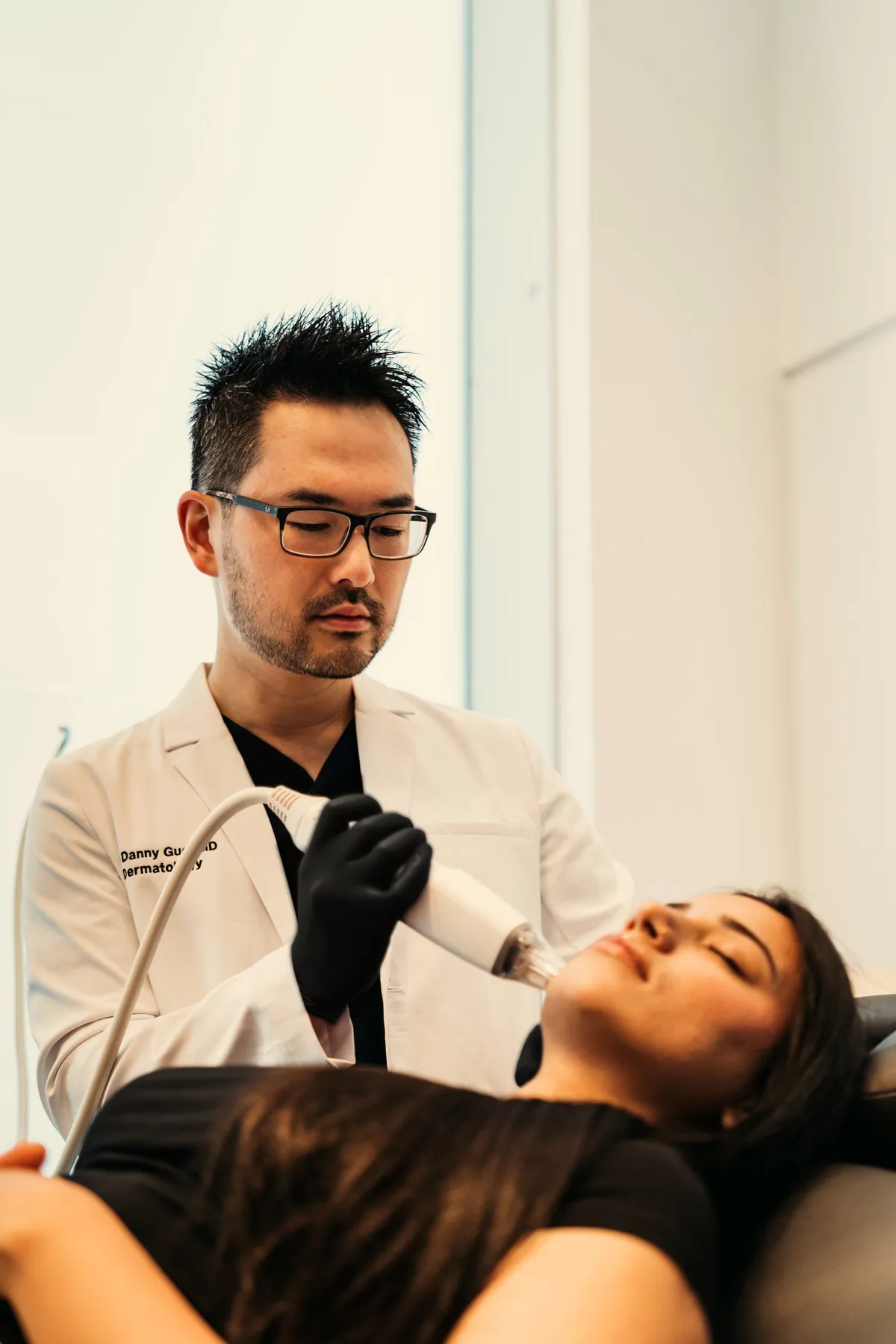
UltraClear Laserin Calgary
Precise resurfacing, with skin of colour in mind.
Book appointmentA cold fibre laser for resurfacing and acne scars, designed to be gentler on skin of colour.
- Type
- Cold fibre laser
- Setting
- In-office
- Provider
- Dr. Guo
Texture and tone, with adjustable downtime
Skin can look dull when fine lines and texture scatter light. UltraClear is a fractional laser that can be set shallow for tone and glow, or deeper for lines and texture, so downtime can be matched to your schedule.
A good home routine helps maintain results: sunscreen every morning and a retinoid at night. As with any laser, we start with an assessment of your skin type and goals.

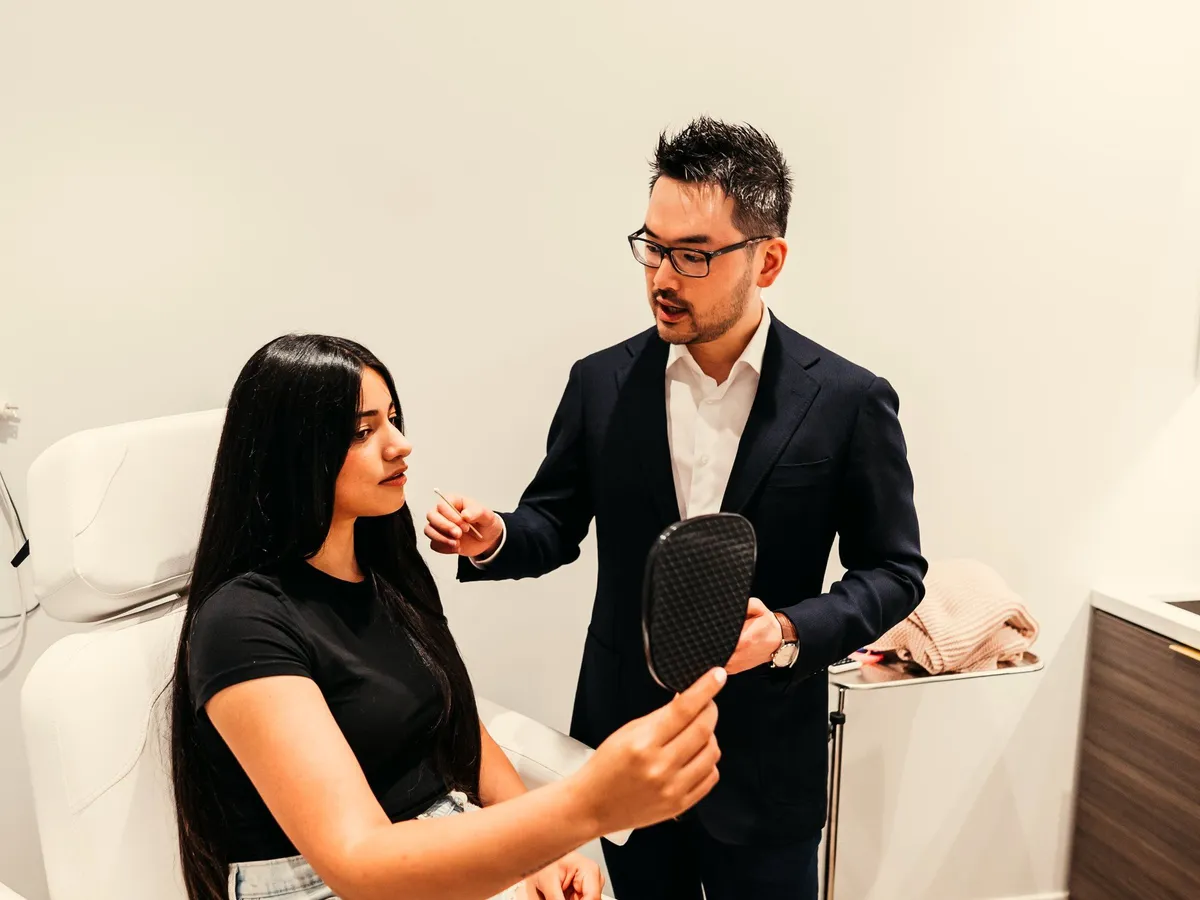
What is UltraClear?
UltraClear is a 2910 nm cold ablative fibre laser made by Acclaro Medical. It was approved by Health Canada in 2025.
Like other resurfacing lasers, it removes microscopic amounts of damaged skin to trigger healing and new collagen. What makes it different is how the energy is delivered: very short pulses remove tissue while leaving little heat behind in the surrounding skin. That is why it is described as a "cold" laser. UltraClear is also a fractional laser.
How UltraClear works
UltraClear can be adjusted from a gentle, superficial resurfacing to deeper treatment, so the depth and intensity are matched to your skin and your concern. Lighter settings refresh tone and texture, while deeper settings reach further into the skin to stimulate collagen and improve scars.
As the skin heals, new collagen forms and the surface becomes smoother and more even.
UltraClear for skin of colour
Heat is an important reason traditional resurfacing lasers can cause post-inflammatory hyperpigmentation and prolonged redness, and darker skin tones are more prone to both. Because UltraClear leaves less heat in the skin, it aims to reduce the risk of pigmentation changes and redness.
Lower risk does not mean no risk. Dr. Guo assesses your skin type and history before treatment and will advise on settings, skin preparation and sun protection to keep the risk as low as possible.
What to expect and recovery
Treatment is done in the office, with numbing used to keep you comfortable. Afterwards the skin is typically red and may feel rough or flake as it heals.
Recovery time depends on how deep the treatment is: lighter treatments generally heal within a few days, while deeper treatments take longer. Sun protection is essential while the skin heals. Dr. Guo will give you aftercare instructions specific to your treatment.
UltraClear vs. CO2 laser resurfacing
Both are ablative resurfacing lasers offered at our clinic, and both stimulate new collagen. The main differences are:
- Heat: CO2 laser resurfacing delivers more heat into the skin. UltraClear is a cold fibre laser that leaves much less.
- Pigmentation and redness: UltraClear is designed to lower the risk of pigmentation changes and redness, particularly in skin of colour.
- Skin type: CO2 resurfacing is generally not recommended for very dark skin. UltraClear is an option across a wider range of skin tones.
Dr. Guo will recommend the laser that best suits your skin type, your concern and the amount of downtime you can accommodate.
What does UltraClear treat?
UltraClear is used for:
- Skin resurfacing to improve texture, tone and fine lines
- Acne scars
- Signs of sun damage
It may not be suitable if you are pregnant or breastfeeding or have an active skin infection or cold sore in the treatment area. Tell Dr. Guo if you have taken isotretinoin recently or are prone to keloid scarring.
UltraClear results and risks
When will I see results?
Skin often looks fresher once it has healed, and improvement continues over the following months as new collagen forms. The number of treatments depends on your concern, and Dr. Guo will outline a plan at your consultation.
Risks and side effects
Redness, swelling and flaking are expected while the skin heals. Less common risks include changes in skin pigmentation, infection and, rarely, scarring. Dr. Guo and his team will go through the risks with you before treatment.
Further reading: UltraClear vs. CO2 Laser Resurfacing: How Do They Compare? · Acne Scar Treatment Options: Lasers, Microneedling and More
State of the art facility
Visit our brand new state-of-the-art facility with top-of-the-line and cutting-edge technologies and equipment, and a full spectrum of medical, surgical, cosmetic, and laser dermatology.
You can count on knowledgeable staff and easy parking; please contact the clinic for current appointment availability. Our facility is one of the largest Mohs Surgical Suites in Canada.
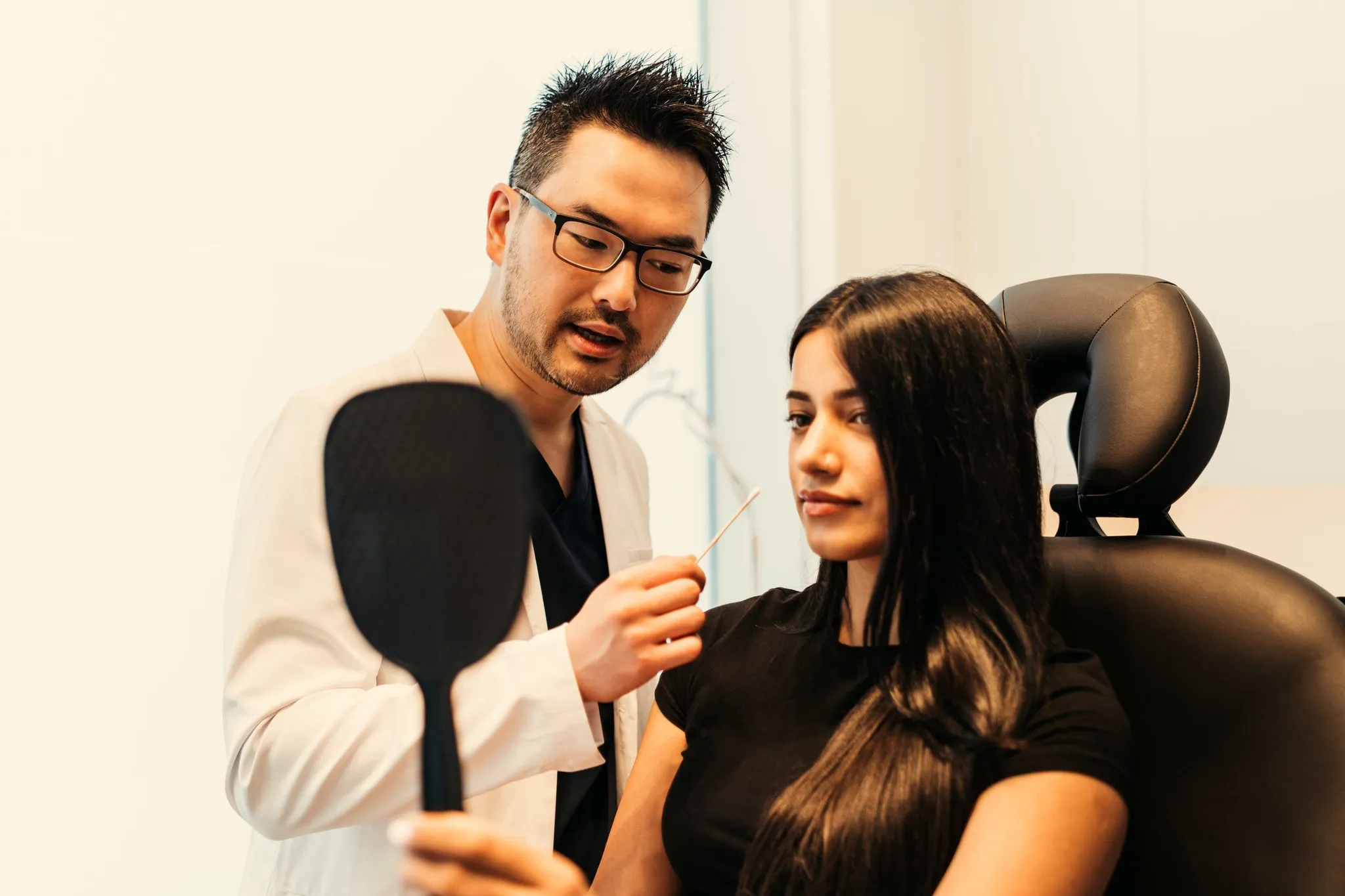
Begin with
a conversation.
Book appointmentUltraClear frequently asked questions
What is the UltraClear laser?
UltraClear is a 2910 nm cold ablative fibre laser used for skin resurfacing and acne scars. It removes microscopic amounts of damaged skin to stimulate new collagen, while leaving little heat in the surrounding skin.
How is UltraClear different from CO2 laser resurfacing?
Both are resurfacing lasers, but UltraClear is a cold fibre laser that delivers much less heat into the skin. This is designed to lower the risk of pigmentation changes and redness, particularly in skin of colour.
Is UltraClear suitable for darker skin tones?
Often, yes. Because it generates less heat, UltraClear is designed to carry a lower risk of pigmentation and redness in skin of colour than traditional resurfacing lasers. Dr. Guo will assess your skin and advise whether it is right for you.
Does UltraClear treat acne scars?
Yes. UltraClear is used for acne scars as well as for general skin resurfacing.
Who performs UltraClear at Rejuvenation Calgary North?
UltraClear is performed by Dr. Danny Guo, a double board-certified dermatologist (Canada and the United States) and fellowship trained Mohs surgeon.
How much downtime is there after UltraClear?
It depends on the depth of treatment. Lighter treatments generally heal within a few days, while deeper treatments take longer. Redness and flaking are expected during healing.
How many UltraClear treatments will I need?
The number of treatments depends on your concern and the depth of treatment. Dr. Guo will outline a plan at your consultation.
Is UltraClear approved in Canada?
Yes. UltraClear was approved by Health Canada in 2025.
How much does UltraClear cost in Calgary?
The cost depends on your individual treatment plan. Contact us to book a consultation with Dr. Guo and receive a quote.
Does UltraClear hurt?
A numbing cream is usually applied first. Most people feel warmth or prickling during treatment, and the skin may feel sunburnt for a day or two afterwards.
When will I see results from UltraClear?
Some brightening is often visible once the skin has healed. Changes in texture and scarring develop gradually over the following months as new collagen forms.
How long do UltraClear results last?
Improvements in texture and scarring can be long-lasting, but the skin continues to age, and sun protection and good skincare help maintain them. Whether and when to repeat treatment is decided at follow-up.