
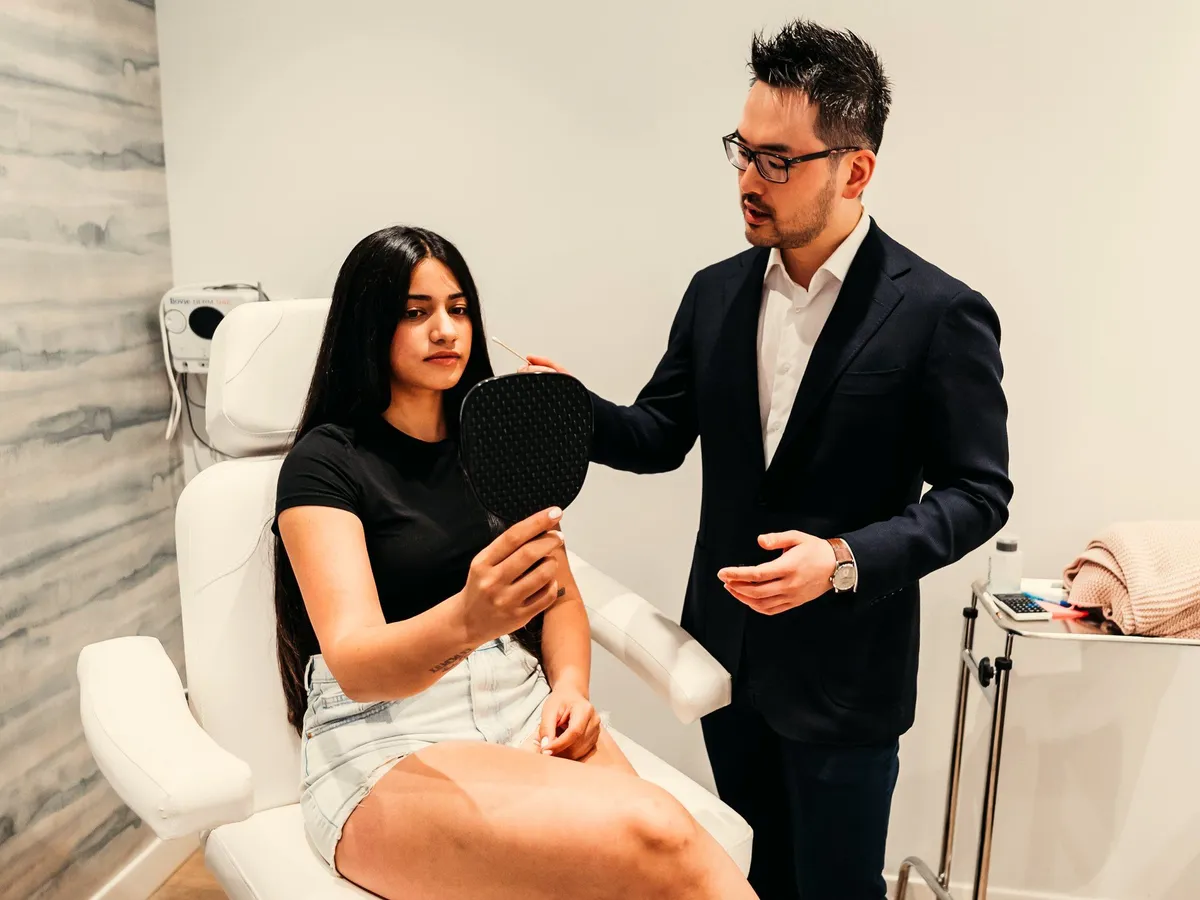
Sweating beyond what the body needs is a medical condition, and it is treatable.
- Episodes
- Weekly or more
- Often
- Hereditary
- Option
- Botox
A physician referral is needed for medical coverage of Botox for hyperhidrosis. Ask your family doctor to refer you to Dr. Guo.
What is hyperhidrosis?
Hyperhidrosis is excessive sweating that is not tied to heat or exercise. It typically affects the hands, feet, underarms and face, with episodes at least once a week.
Beyond the discomfort, it can cause sweat stains, odour and skin infections, and it often affects confidence and daily life.
Symptoms
- Sweaty palms (palmar hyperhidrosis) make it hard to shake hands or handle paper and devices.
- Sweaty feet (plantar hyperhidrosis) contribute to odour and make open footwear difficult.
- Underarm wetness (axillary hyperhidrosis) can show through clothing.
- Facial sweating (craniofacial hyperhidrosis) affects the face and scalp.
Symptoms appear without a clear trigger, even at rest or in cool weather.
Causes
Primary hyperhidrosis comes from overactive sweat glands and usually appears early in adulthood. The exact mechanism is unknown, but it is thought to be hereditary.
Excessive sweating can also be a sign of another medical condition, so tests are sometimes needed to rule that out.
Treatment plan
After a consultation, Dr. Guo’s team builds a plan based on severity, the areas affected and your overall health.
- Botox injections can help, particularly for underarm sweating.
- Surgery or thermal energy treatment that targets the sweat glands is a last resort and may need referral to a specialised surgeon.
A physician referral is needed for medical coverage of Botox for hyperhidrosis. Ask your family doctor to refer you to Dr. Guo.
What to expect at your visit
Your first appointment covers your sweating concerns, your medical and family history, an examination of the affected areas, the effect on your daily life and any treatments you have already tried.
Follow-up visits check how well treatment is working and adjust it as needed.
Begin with
a referral.
Contact the clinicHyperhidrosis frequently asked questions
What is Hyperhidrosis?
Hyperhidrosis is a condition characterized by excessive sweating that goes beyond the body's normal need to maintain a consistent body temperature. It often affects areas like the underarms, palms, feet, and face.
What Causes Hyperhidrosis?
Hyperhidrosis can be caused by overactive sweat glands, particularly in the underarm area. It can be triggered by genetics, certain medical conditions, or medications.
How Can Prescription Antiperspirants Help with Hyperhidrosis?
Prescription antiperspirants contain higher concentrations of active ingredients compared to over-the-counter products. They work by blocking the sweat ducts, reducing excessive sweating in patients with hyperhidrosis.
Are There Oral Medications for Hyperhidrosis?
Yes, oral medications such as anticholinergics can be prescribed to help reduce sweat production. These medications work by blocking the chemical signals that trigger sweat glands.
How Does Hyperhidrosis Affect Social Situations?
Excess sweating can cause embarrassment and anxiety in social situations, leading to social withdrawal and reduced participation in daily activities. Visible sweat patches and odor can impact self-confidence and social interactions.
What Are Common Treatments for Hyperhidrosis?
Treatment for hyperhidrosis includes prescription antiperspirants, oral medications, Botox injections, iontophoresis (a technique that uses electrical currents to reduce sweating), and surgical options in severe cases.
Can Dead Skin Cells Affect Hyperhidrosis?
A build-up of dead skin cells may clog sweat ducts, but it is not a cause of hyperhidrosis. Regular gentle exfoliation and proper skin care can help keep the skin comfortable alongside medical treatment.
What Can Be Done About Sweat Patches from Hyperhidrosis?
To manage sweat patches, patients with hyperhidrosis can use absorbent pads, wear moisture-wicking clothing, and apply prescription antiperspirants. Botox injections can also reduce underarm sweating, minimizing sweat patches.
How Does Hyperhidrosis Impact Daily Activities?
Severe sweating can interfere with daily activities such as writing, using electronic devices, and driving. Managing hyperhidrosis can improve comfort and functionality in everyday tasks.
Is Hyperhidrosis Linked to Hair Growth?
While hyperhidrosis itself does not directly affect hair growth, the moisture from excessive sweating can create an environment conducive to bacterial and fungal infections, which may impact hair and skin health. Proper hygiene and skincare are essential for patients with hyperhidrosis.