
Any spot that is new, changing or unlike your other moles should be checked.
- Main cause
- UV exposure
- Gold standard
- Mohs surgery
- Warning signs
- ABCDE
What is skin cancer?
Skin cancer can develop anywhere on the body but grows most often on skin exposed to sunlight.
Not all skin cancers are equally dangerous. Basal cell carcinoma rarely spreads and is usually not life-threatening, whereas untreated melanoma can be fatal within months.
Warning signs
Basal cell and squamous cell carcinoma generally appear as lumps or open sores that do not heal. Melanoma often appears as a new or changing mole or spot. The ABCDE rule covers the main warning signs:
- Asymmetry
- Irregular Borders
- Uneven Colour
- Diameter larger than 6 mm
- Evolving size, shape or colour
Melanoma can also be small, pink or red, so any spot that looks different from your other moles (an “ugly duckling”) should be checked by a dermatologist.
Causes and risk
Ultraviolet radiation from the sun is the most common cause, and indoor tanning can also lead to skin cancer. Less common causes include immunosuppressive medications, conditions that weaken the immune system and genetic conditions.
Risk is higher with prolonged sun exposure without protection, regular use of tanning facilities, and a family history of skin cancer. People at higher risk, or with many moles, may benefit from mole mapping.
Treatment options
Mohs surgery is widely considered the gold standard. Thin layers of cancerous skin are removed until only cancer-free tissue remains, with a success rate of 95% or more for basal cell and squamous cell carcinoma.
Other treatments include wide excision, lymph node dissection, topical chemotherapy and radiation therapy.
Further reading: Mohs surgery, the gold standard for skin cancer treatment
What skin cancer really looks like

Concerned about
a spot?
Contact the clinicSkin cancer frequently asked questions
What are the main types of skin cancer?
The three main types are basal cell carcinoma, squamous cell carcinoma and melanoma. Basal cell carcinoma is the most common and rarely spreads, while melanoma is the most serious.
What are the warning signs of skin cancer?
Watch for a lump or sore that does not heal, a new or growing spot, or a mole that changes in size, shape or colour. Any of these should be checked by a doctor.
What is Mohs surgery?
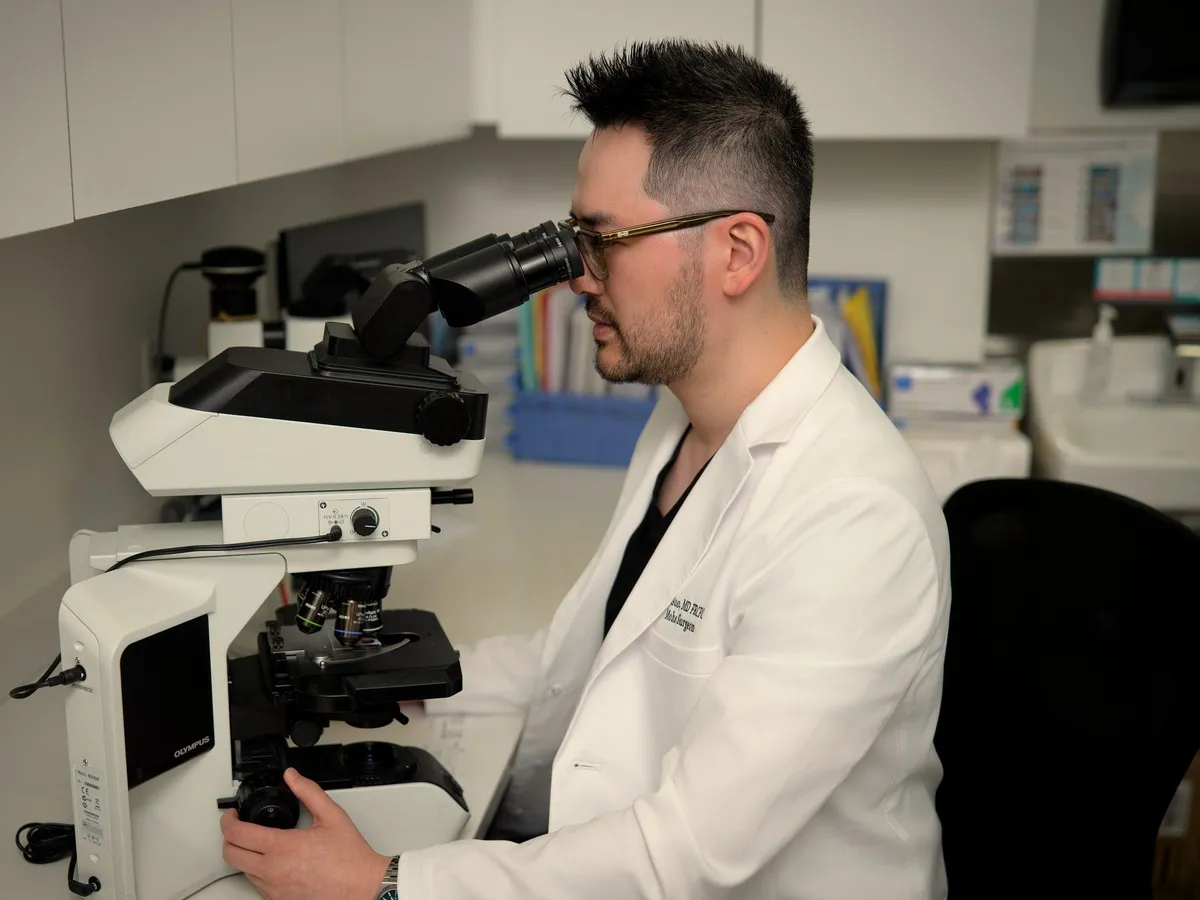
Mohs micrographic surgery removes skin cancer one thin layer at a time, with each layer examined under a microscope right away until no cancer cells remain. This spares healthy tissue and gives high cure rates for basal and squamous cell carcinoma.
Who performs Mohs surgery at Rejuvenation Calgary North?
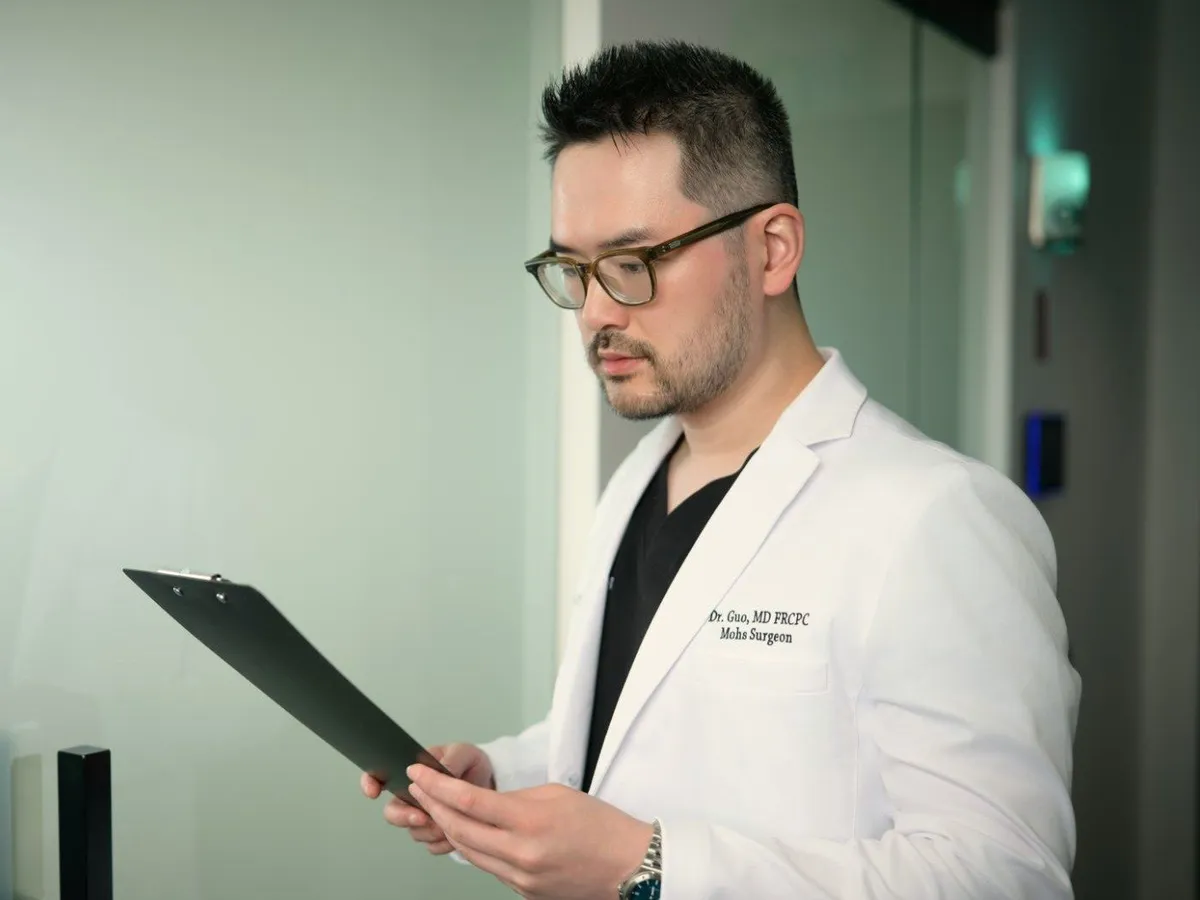
Mohs surgery at Rejuvenation Calgary North is performed by Dr. Danny Guo, a double board-certified dermatologist and fellowship-trained Mohs surgeon.
How can I lower my risk of skin cancer?
Protect your skin from the sun with clothing and sunscreen, avoid indoor tanning, and have new or changing spots checked, especially if you have a family history of skin cancer.