Can One Product Replace Three?
How I decide whether a multitasking product is worth it: three tests, five product types, and when to keep things separate.
Can a USD $145 face cream save you money? Possibly, if it replaces several products you would otherwise buy and use.
That’s the promise of multifunctional skincare: fewer steps, fewer bottles, less to think about. Sometimes it delivers. Sometimes you end up with one product that does three jobs badly.
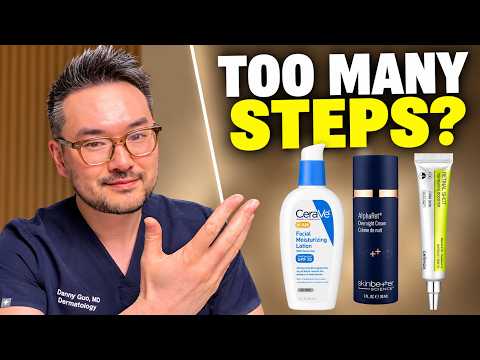
In my latest video I went through five products that could reasonably replace part of a routine. Here I want to explain the thinking, so you can judge any “all-in-one” product yourself.
My three tests
When a product claims to do several things, I ask three questions.
1. Does it do its main job well? A moisturizer with SPF still has to be a good sunscreen. A retinoid cream still has to deliver a meaningful retinoid. If the primary job is weak, the extras don’t matter.
2. Can your skin tolerate the combination? Putting several actives in one bottle means you can’t adjust them separately. If one ingredient irritates you, you lose the whole product.
3. Does it actually remove something from your routine? This is the one people skip. If you keep using everything else too, a multitasker isn’t saving you anything. It’s just one more bottle.
The five types I looked at
A moisturizer with sunscreen built in (CeraVe AM Facial Moisturizing Lotion SPF 30). This can replace a separate morning moisturizer and sunscreen. The catch: you need to apply enough to get the protection on the label, and many people apply a moisturizer more thinly than a sunscreen.
A retinoid night cream (Skinbetter Science AlphaRet Overnight Cream). Combining a retinoid with exfoliating and moisturizing ingredients can replace a night serum, an exfoliant, and a night cream. It’s the expensive one, which is exactly why the third test matters.
A retinal booster you mix in (Celimax Vita-A Retinal Shot Tightening Booster). Boosters let you add an active to the moisturizer you already like. That’s a nice middle ground if you want control over strength.
An azelaic acid booster (Paula’s Choice 10% Azelaic Acid Booster). Azelaic acid helps with redness, bumps, and uneven tone, so one product can cover concerns people often buy two or three serums for. I wrote a whole post on azelaic acid if you want the details.
A sunscreen with brightening ingredients (Celimax Pore+ Dark Spot Brightening Care Sunscreen). Pairing daily sunscreen with a tone-evening ingredient makes sense, since sun protection is already the most important step for dark spots.
The full breakdown of what I liked about each, and where I’d hesitate, is in the video.
When to keep things separate
Multitaskers aren’t for everyone. I’d keep products separate if:
- Your skin is sensitive or you’re starting something new, so you can tell what’s causing a reaction
- You need a specific strength of an active, like a retinoid you’re building up slowly
- You need high sun protection for long days outdoors, where a dedicated sunscreen is easier to apply properly
- You’re treating a medical condition with a plan from your doctor
What I’d do
Start with the step you’d most like to drop. Find a product that does that job and your next most important one, and make sure you actually stop buying the other two.
The goal is a simpler routine that still addresses your concerns, not more products because they promise to do everything.
This article is for general education and is not personal medical advice. Every person and every skin is different, and results vary; for a concern about your own skin, see a doctor.
Also on Substack: read this article on Dr. Guo’s Substack
Free skincare guide: your routine, age by age
Get the guide